English
 繁体中文
繁体中文 简体中文
简体中文 Deutsch

Over the 138 years since the world's first commercial disposable sanitary napkin was introduced in 1888, the industry has witnessed a spiral development where product definition establishes equipment capability boundaries, and equipment breakthroughs in turn redefine product forms. Every revolutionary improvement in product experience inevitably corresponds to a major breakthrough in the core technology of sanitary napkin machines; each generation of technological advancement in equipment gives birth to entirely new product categories previously unimaginable.
I. Birth of Disposable Sanitary Napkins and Mechanization Beginnings (1888-1968): From Manual to Semi-Automated Production
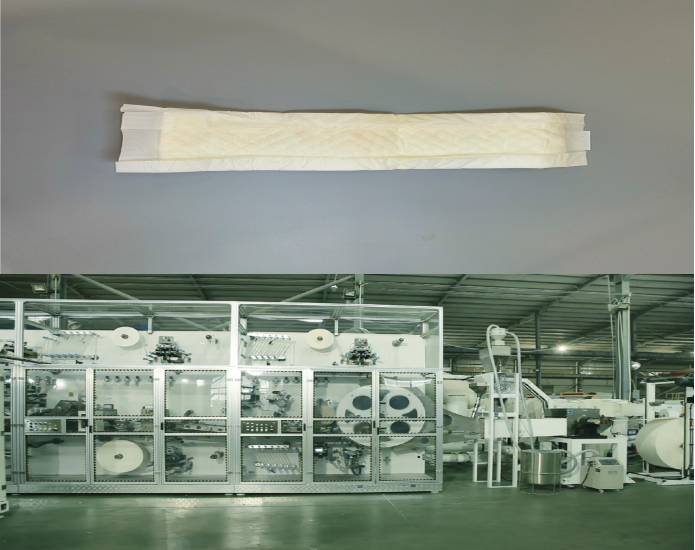
1.1 Product Milestones and Technical Details
1888: Southall Brothers in Birmingham, UK, launched the world's first commercial disposable sanitary napkin, "Southall's Towels." Measuring approximately 25cm long, 8cm wide, and 10mm thick, this product used a 3:1 blend of absorbent cotton and wood pulp as the absorbent core, with wax-coated cotton fabric as the waterproof backing. Weighing about 15 grams, its absorption capacity was only 1/5 of modern daytime sanitary napkins. Priced at 1 shilling for 12 pieces—equivalent to half a day's wages for an average worker at the time—it was undeniably a luxury product.
1921: Kimberly-Clark Corporation in the USA introduced Kotex sanitary napkins using surplus medical cellulose cotton (Cellucotton) from World War I, marking the official birth of modern disposable sanitary napkins. Cellucotton, a highly absorbent fiber made from wood pulp, offered twice the water absorption capacity of traditional cotton at only 1/3 the cost. Launched coinciding with the rise of the American women's liberation movement, Kotex quickly gained popularity among professional women, achieving sales exceeding $1 million in its first year.
1940s-1960s: No major breakthroughs in product form occurred, with improvements primarily focusing on fastening methods. Sanitary napkins with elastic waistbands were introduced, secured with plastic buckles; later "internal" sanitary napkins were launched, requiring dedicated sanitary belts. However, all products remained straight-shaped without any side-leakage protection, making shifting and side leakage common issues during use.
Usage Pain Points: Three critical flaws plagued sanitary napkins during this phase: (1) Difficult fastening requiring belts or pins, prone to shifting during activity; (2) Poor absorbency requiring frequent changes; (3) Extremely poor breathability, with wax-coated cotton backing completely air-impermeable, causing skin irritation and inflammation with prolonged use.
1.2 Corresponding Equipment Revolution and Technical Details
1890s: The first dedicated sanitary napkin production equipment emerged in the USA, featuring a purely mechanical cam-linkage structure driven by a 10-horsepower steam engine. This equipment enabled automatic cutting, folding, and simple pressing of materials, achieving a production speed of 12 pieces per minute—over 100 times more efficient than manual production.
1920s: Following Kotex's success, continuous web conveying technology was introduced to sanitary napkin manufacturing. Equipment began using rolled cotton batting and fabric instead of sheet materials, increasing production speed to 50-100 pieces per minute. Equipment from this period remained purely mechanical, with all movements driven by a single motor through complex gearboxes and camshafts.
1950s: The first generation of semi-automatic production lines emerged, adding automatic embossing units and semi-automatic packaging units. Embossing units created diamond or grid patterns on sanitary napkin surfaces using heated metal rollers, improving absorbent core integrity; packaging units required workers to place finished products into cartons for machine sealing. A production line required 15-20 workers, primarily responsible for loading, quality inspection, and packaging.
Equipment Technical Limitations:
· Rigid transmission: All stations operated synchronously without independent speed adjustment—entire line shutdown required if any station encountered issues
· Low precision: Dimensional errors up to ±5mm with poor product consistency
· Limited functionality: Only capable of producing simplest straight-shaped products, unable to implement complex designs
· Low yield rate: Approximately 70%-80%, with significant product waste due to dimensional inaccuracies or poor adhesion
1.3 In-Depth Analysis of Co-Evolution Relationship
This phase represents a classic period where product demand drove equipment development. Before disposable sanitary napkins existed, no industrial product required precise lamination of cotton batting, wood pulp, and cotton fabric—thus no corresponding production equipment existed. Only after the commercial value of disposable sanitary napkins was fully proven did capital invest in equipment R&D.
However, extremely low equipment technology levels severely restricted product forms to the simplest straight designs. Any slightly complex design, such as wings or three-dimensional guards, could not be industrially produced with contemporary equipment. This created a vicious cycle of "simple products → simple equipment → impossible product upgrades," only broken by the emergence of hot-melt adhesive technology.
II. Self-Adhesive Revolution and Automation Popularization (1969-1999): Hot-Melt Adhesive Technology Transforms Everything
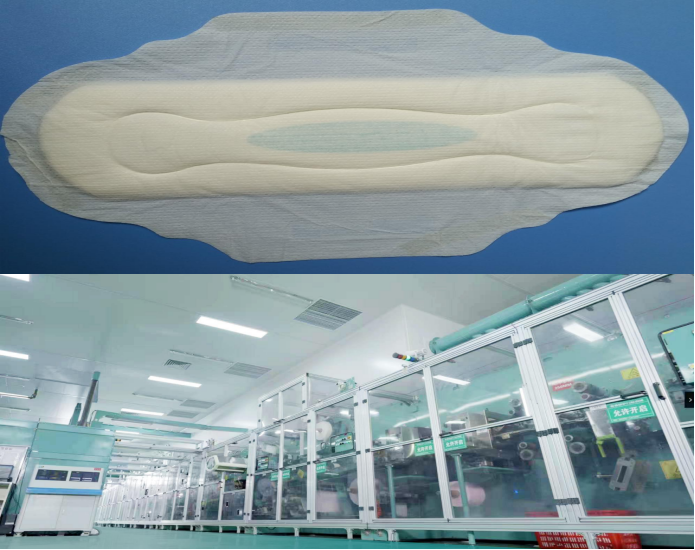
2.1 Product Milestones and Technical Details
1969: Hot-melt pressure-sensitive adhesive technology achieved breakthrough progress. Previously, pressure-sensitive adhesives were primarily solvent-based, containing large amounts of organic solvents with pungent odors and slow drying speeds, unsuitable for high-speed production lines. The new hot-melt pressure-sensitive adhesive, composed mainly of synthetic rubber and resin, becomes liquid when heated to 160-180°C, cools and solidifies within seconds after application to form long-lasting adhesion, and is non-toxic and odorless—ideal for hygiene product manufacturing.
1971: Johnson & Johnson launched the world's first beltless back-adhesive sanitary napkin, "Stayfree." This product applied a 2cm-wide hot-melt adhesive strip to the bottom, allowing direct attachment to underwear after peeling off the release paper—completely eliminating belts and pins used for half a century. Stayfree's introduction triggered a revolution in the sanitary napkin industry, capturing over half the US market within just a few years.
1985: Stayfree introduced the first sanitary napkin with wings. Wings are extensions on both sides of the sanitary napkin that fold backward to secure to the outside of underwear, perfectly solving side leakage issues. Considered one of the most important innovations in sanitary napkin history, wings remain standard configuration for the vast majority of sanitary napkins today.
1990s: The "ultra-thin" concept emerged. With advancements in wood pulp refining technology, sanitary napkin thickness decreased from 5mm to under 2mm, providing greater comfort and fit. Simultaneously, products became segmented into different specifications: daytime (240mm), nighttime (290mm), mini (180mm), and panty liners (150mm) to meet various scenario requirements.
Chinese Market Development: In 1982, Beijing No. 11 Paper Mill introduced China's first modern sanitary napkin production line from Japan's Zuiko Corporation, with a total investment of 3 million RMB and production speed of 200 pieces per minute. In 1985, the "Anle" brand sanitary napkin launched in Shanghai, becoming China's first domestic sanitary napkin brand. In 1994, China's first independently developed winged sanitary napkin production line was born in Nantong, Jiangsu, marking the beginning of China's sanitary napkin equipment industry.
2.2 Corresponding Equipment Revolution and Technical Details
Early 1970s: Hot-melt adhesive coating systems became core components of sanitary napkin machines. A complete hot-melt adhesive system includes a melter, delivery pipes, coating guns, and control systems. The melter heats and melts solid hot-melt adhesive pellets, delivers them through insulated pipes to coating guns, which precisely apply adhesive to specific positions on sanitary napkins. Early coating guns used doctor blade application with significant adhesive weight errors; later spray application improved adhesive weight control accuracy to ±5%.
Mid-1980s: Major equipment modifications were made to accommodate winged product production, adding wing forming units, wing folding units, and wing adhesive lamination units. Production lines expanded from 3 main stations to 8-10 stations, with total length increasing from 10 meters to over 25 meters. Wing forming units required cutting excess side material into specific shapes, folding to the back of the sanitary napkin, and laminating adhesive and release paper—demanding extremely high equipment synchronization precision.
Late 1980s: PLC (Programmable Logic Controller) replaced traditional relay control systems, becoming the "brain" of sanitary napkin machines. PLC enables linked control and parameterized adjustment of all stations through programming, significantly improving equipment flexibility and reliability. Previously, parameter adjustment required gear or cam replacement; now it can be completed simply by modifying numbers on the touchscreen.
1990s: Equipment performance improved dramatically, with production speed increasing from 200 pieces per minute to 400 pieces per minute and yield rates exceeding 85%. Simultaneously, frequency conversion speed regulation technology and tension control systems were introduced, enabling better control of material conveying speed and tension to improve product quality.
2.3 In-Depth Analysis of Co-Evolution Relationship
This marked the first time in history that material technology breakthroughs simultaneously triggered dual revolutions in both products and equipment. The invention of hot-melt adhesive not only completely transformed sanitary napkin usage but also reshaped the overall architecture of sanitary napkin machines. Before hot-melt adhesive, sanitary napkin layers were primarily connected through stitching or pressing—poor adhesion that also compromised comfort. Hot-melt adhesive application enabled precise lamination of multiple materials, laying the foundation for subsequent more complex product designs.
The emergence of winged products represented a critical turning point. It required equipment capable of handling complex three-dimensional structures, driving evolution from "simple machinery" to "automated systems." To produce winged sanitary napkins, equipment manufacturers had to develop entirely new forming and folding mechanisms—technological accumulation that provided support for later innovations such as three-dimensional guards and acquisition layers.
III. Polymer Era and Full-Servo High-Speed Production (2000-2015): From Passive Following to Active Support
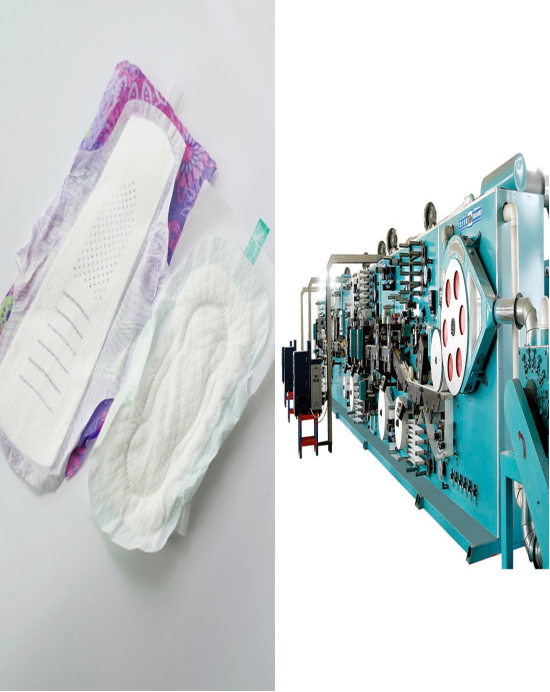
3.1 Product Milestones and Technical Details
Around 2000: Super Absorbent Polymer (SAP) began large-scale application in sanitary napkin absorbent cores. SAP is a synthetic polymer material with ultra-high water absorption capacity, capable of absorbing 300-500 times its weight in water and forming a gel after absorption that prevents rewetting even under pressure. SAP application further reduced sanitary napkin thickness from 2mm to under 1mm while improving water retention capacity by over 10 times.
Modern Sanitary Napkin Standard Structure Formed: A typical sanitary napkin contains 6-8 layers of different materials from outside to inside:
1. Top sheet: Direct skin contact, available in dry net surface (PE perforated film) and cotton soft surface (non-woven fabric)
2. Acquisition layer: Rapidly transfers liquid from top sheet to absorbent core
3. Absorbent core: Composed of wood pulp and SAP mixture, responsible for liquid storage
4. Tissue paper: Wraps absorbent core to prevent SAP leakage
5. Leakage barrier: Prevents liquid from seeping from sides
6. Breathable back sheet: Allows air passage while blocking liquid leakage
7. Adhesive layer: For securing to underwear
8. Release paper: Protects adhesive, peeled before use
2003: Dry net surface and cotton soft surface became the two mainstream top sheet materials. Dry net surface, made from perforated PE film, offers fast liquid transfer and minimal rewetting but slightly lower skin-friendliness; cotton soft surface, made from thermal-bonded non-woven fabric, provides soft skin comfort but slower liquid transfer. Different brands began selecting top sheet materials based on target consumer preferences.
2005: Breathable back sheets became universally adopted. Traditional PE back sheets were completely air-impermeable, causing stuffiness and discomfort with prolonged use. New breathable back sheets use microporous technology with pore diameters smaller than water molecules but larger than air molecules, achieving "breathable yet waterproof" performance.
2008: Stayfree launched liquid sanitary napkins featuring innovative FlexFoam™ one-piece molded absorbent cores. Instead of wood pulp and SAP mixtures, these absorbent cores are directly foamed from polymer materials, offering fast absorption, no deformation, and no rewetting—representing a major breakthrough in absorbent core technology.
3.2 Corresponding Equipment Revolution and Technical Details
Early 2000s: Full-servo drive systems replaced traditional mechanical transmission, becoming standard configuration for high-end sanitary napkin machines. Full-servo systems mean each production line station is driven by an independent servo motor, achieving synchronized movement through electronic cams. Compared to traditional mechanical transmission, full-servo systems offer:
· High precision: Motion accuracy up to ±0.1mm, enabling micron-level control
· Excellent flexibility: Independent speed adjustment for each station, parameter adjustment without mechanical part replacement
· Fast response: Quick start and stop, reducing material waste
· High reliability: Reduced wearing parts like gears and cams, lowering maintenance costs
Core Breakthrough: SAP precise scattering system. SAP is a fine granular material—uniform, quantitative scattering in specific absorbent core regions represents the key technical challenge for ultra-thin sanitary napkin production. Modern SAP scattering systems use negative pressure adsorption + static elimination technology, enabling precise SAP scattering in pre-designed regions with scattering weight error controlled within ±2%. Some high-end equipment also enables zoned scattering, applying different SAP quantities to different absorbent core regions to further improve absorption efficiency.
Around 2010: Achieved synchronous lamination technology for over 10 material layers. A modern sanitary napkin contains approximately 10 layers of materials with different properties, thicknesses, elasticity, and tension. For precise lamination, equipment is equipped with multi-axis tension control systems that monitor and adjust each material layer's tension in real-time, achieving tension control accuracy of ±0.1N.
Performance Improvements: Production speed jumped from 400 pieces per minute to 600-1000 pieces per minute; preliminary visual inspection systems were introduced, automatically identifying and rejecting products with obvious defects such as missing corners, broken adhesive, and foreign objects; domestic equipment manufacturers including Peixin, Xingshi, and Jiangnan emerged, gradually capturing the mid-to-low end market and advancing into high-end markets.
3.3 In-Depth Analysis of Co-Evolution Relationship
During this phase, equipment technology transformed from "passively following product demand" to "actively supporting product innovation." Without full-servo system precision control and SAP scattering technology, modern multi-layer laminated ultra-thin sanitary napkins could never achieve industrial production. For example, one-piece molded absorbent cores for liquid sanitary napkins require precise foam molding under high temperature and pressure—demanding extremely high temperature and pressure control accuracy only achievable with full-servo equipment.
Improved equipment performance enabled brand owners to experiment with various complex product designs, greatly enriching market offerings. During this period, the sanitary napkin market flourished with endless new concepts and features: three-dimensional guards, instant blue cores, negative ions, antibacterial, and more. While some functions were primarily marketing gimmicks, their emergence itself demonstrated that equipment technology progress provided broad space for product innovation.
IV. Period Panties Boom and Intelligent Upgrading (2016-2025): Era of AI and Flexible Manufacturing
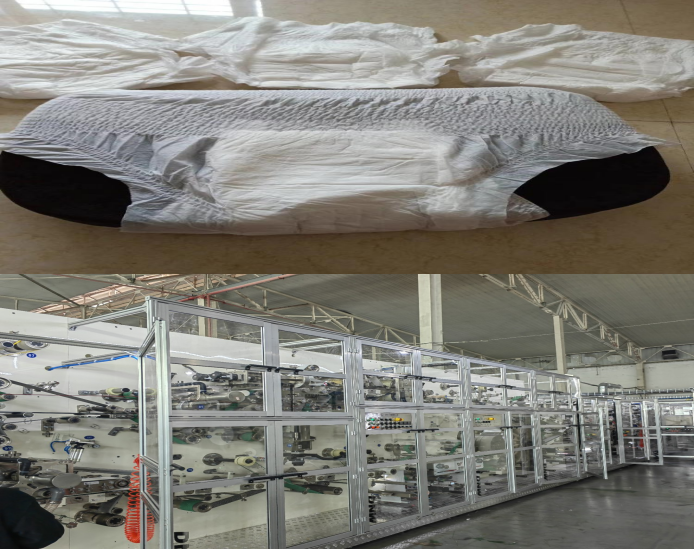
4.1 Product Milestones and Technical Details
Around 2016: Period panties / panty-style sanitary napkins began explosive growth. Period panties are disposable hygiene products resembling underwear, featuring 360° elastic waistbands and three-dimensional leakage guards, providing comprehensive leakage protection—ideal for nighttime use or heavy flow days. According to Euromonitor International data, China's period panties market exceeded 15 billion RMB in 2025, accounting for over 35% of the overall sanitary napkin market and becoming the absolute mainstream in the nighttime segment.
Since 2018: Return to natural materials, with rapid growth in products featuring organic cotton, silk, bamboo fiber, and other natural top sheets. Consumers increasingly focus on product safety, with "no fluorescent agents, no chlorine bleaching, no fragrances" becoming standard for high-end sanitary napkins. Some brands also launched biodegradable sanitary napkins using bio-based materials such as corn starch and PLA to reduce environmental impact.
Since 2020: Highly segmented products emerged, with specialized products for different populations:
· Teen sanitary napkins: Thinner, softer, with more fashionable packaging designs
· Maternity sanitary napkins: Larger, thicker, with greater absorption capacity for postpartum lochia
· Menopausal sanitary napkins: Designed for menopausal women with light, irregular flow
· Light incontinence sanitary napkins: Faster absorption for mild urinary incontinence
Period Panty Technical Features: Period panty structure is far more complex than traditional sanitary napkins, primarily consisting of front panel, back panel, absorbent core, elastic waistband, and leg elastics. A single period panty requires over 20 different materials and more than 30 manufacturing processes.
4.2 Corresponding Equipment Revolution and Technical Details
Around 2018: AI visual inspection systems became standard for high-end production lines. Traditional visual inspection systems only identified simple defects, while AI visual inspection systems using deep learning algorithms can detect tiny foreign objects as small as 0.005mm—including hair, metal shavings, and plastic particles—with a 99.97% defect detection rate. A complete AI visual inspection system is equipped with 10-12 sets of HD cameras installed at key production line stations for real-time product quality inspection.
Since 2020: Digital twin technology widely applied in sanitary napkin machine design and commissioning. Digital twin refers to constructing a digital model identical to physical equipment in a virtual environment. Through simulation and commissioning on the digital model, design issues can be identified and resolved in advance, reducing on-site commissioning cycles by over 60%. Simultaneously, digital twins can be used for equipment operation monitoring and predictive maintenance, improving operational efficiency.
Modular Design: Modern high-end sanitary napkin machines adopt modular design philosophy, decomposing production lines into multiple independent functional modules: unwinding module, lamination module, forming module, cutting module, packaging module, etc. Different modules can be combined and replaced as needed, supporting quick product specification changeovers within 15 minutes to meet flexible production requirements for multiple varieties and small batches.
Performance Peak: Currently, the world's fastest sanitary napkin production lines achieve 1200-1500 pieces per minute; period panty production lines reach maximum speeds of 600 pieces per minute; yield rates stabilize above 99%; unit product energy consumption reduced to 0.85kWh per 10,000 pieces—40% lower than 10 years ago.
Rise of Chinese Equipment Manufacturers: China has become the world's largest sanitary napkin equipment manufacturer. Domestic manufacturers including Peixin, Xingshi, and Jiangnan have reached international advanced levels, capturing over 70% of the global market share. Chinese equipment not only offers price advantages but also leads globally in technological innovation—including AI visual inspection, digital twin, and modular design applications.
4.3 In-Depth Analysis of Co-Evolution Relationship
Consumption upgrading represents the core driving force during this phase. With rising income levels and enhanced health awareness among Chinese residents, consumer requirements for sanitary napkin products have shifted from "usable" to "comfortable, safe, and pleasant." This demand upgrade has forced equipment manufacturers to continuously improve technical levels, introducing advanced technologies such as AI, big data, and IoT to enhance product quality and production efficiency.
Personalized, fragmented market demand has spawned flexible manufacturing models. Previously, a production line could only produce one product specification, with changeovers requiring hours or even days—causing significant material waste. Today's modular production lines can complete changeovers within 15 minutes, enabling rapid response to changing market demands for small-batch, multi-variety production.
The popularization of period panties provides the best illustration. This product, with far more complex structure than traditional sanitary napkins, emerged around 2000 but could not be commercialized on a large scale due to limited equipment technology and high production costs. Only with the emergence of intelligent high-speed production lines did period panty production costs decrease significantly, becoming affordable for ordinary consumers.
V. Future Outlook (Post-2025): Sustainability and Personalized Manufacturing
5.1 Next-Generation Product Trends
Fully Biodegradable Sanitary Napkins: Using 100% bio-based materials including top sheets, absorbent cores, back sheets, and adhesives—completely biodegradable within 3-6 months in natural environments without generating white pollution.
Smart Sanitary Napkins: Integrated micro-sensors capable of real-time monitoring of flow, pH, temperature, and other physiological indicators, transmitting data to mobile apps via Bluetooth to help women better understand their menstrual cycles and detect health issues promptly.
3D-Printed Personalized Sanitary Napkins: Custom-produced unique sanitary napkins based on individual body shapes, flow characteristics, and skin sensitivity, providing the most comfortable user experience.
5.2 Next-Generation Equipment Technology Directions
Green Manufacturing Equipment: Integrated closed-loop material recycling systems to recover, process, and reuse waste edge materials generated during production, achieving zero waste in manufacturing processes; adopting energy-saving motors and waste heat recovery technology to further reduce energy consumption.
Bio-Based Material Specialized Equipment: Developing dedicated forming, laminating, and cutting technologies tailored to biodegradable material characteristics, addressing issues such as low strength, easy stretching, and poor thermal stability of bio-based materials.
Industry 4.0 Fully Intelligent Factories: Achieving complete unmanned operation from raw material warehousing to finished product delivery, optimizing production planning and scheduling through AI algorithms to improve production efficiency and reduce manufacturing costs.
Micro-Manufacturing Technology: Providing low-cost, rapid production solutions for personalized customized products, enabling commercialization of innovative products such as 3D-printed sanitary napkins.
VI. Evolution of Global Industry Trade Patterns and China's Supply Chain Core Advantages
6.1 Four Major Migrations of Global Industry Trade Patterns
Phase I (1888-1968): European-American Duopoly Era
· Global market completely monopolized by a few European-American giants including Kimberly-Clark (USA) and Southall Brothers (UK), with technology and production concentrated in developed Western countries
· Production equipment manufactured exclusively by US and UK domestic enterprises, with core processes strictly confidential and no international technology transfer
· Developing regions in Asia, Africa, and Latin America had virtually no industrial production capacity, relying entirely on European-American imports with high product prices and global average penetration below 5%
· International trade primarily consisted of finished product exports, with minimal equipment exports limited to European-American allied nations
Phase II (1969-1999): Japanese Technology Export and Industrial Transfer
· Japanese enterprises including Zuiko and Fuji Machinery broke European-American technological monopolies, becoming global leading sanitary napkin equipment manufacturers and initiating the first global industrial transfer
· Japanese equipment manufacturers began exporting equipment and technology to South Korea, Taiwan, Southeast Asia, and other regions, driving the rise of sanitary napkin industries in these areas
· China initiated domestic sanitary napkin industrialization through Japanese equipment imports, becoming Asia's largest sanitary napkin consumer market by the late 1990s
· Global trade pattern transformed from "European-American finished product exports" to "Japanese equipment exports + regional finished product production," with global average penetration increasing to 30%
Phase III (2000-2015): China's Mid-to-Low End Market Rise and Global Supply Chain Formation
· Chinese equipment manufacturers completed technology digestion, absorption, and independent innovation, breaking core technology barriers including full-servo drives and SAP scattering, launching highly cost-effective mid-to-low end sanitary napkin production lines
· China became the world's largest sanitary napkin producer and exporter, with finished product exports covering over 100 countries and regions worldwide
· Clear global industrial division: Europe and America dominated high-end markets and branding, Japan dominated high-end equipment markets, China dominated mid-to-low end equipment and finished product manufacturing
· Global average penetration increased to 60%, with developing country markets becoming the main growth driver
Phase IV (2016-2025): China Leading Global Industry and Technological Transformation
· Chinese equipment manufacturers comprehensively broke high-end technical barriers, with AI visual inspection, digital twin, and modular design technologies reaching international advanced levels
· Chinese sanitary napkin equipment captured over 70% of global market share, exporting not only to developing countries but also extensively entering European-American, Japanese, and Korean developed markets
· China formed a complete industrial chain from raw materials (SAP, non-woven fabrics, hot-melt adhesives), equipment manufacturing to finished product production, becoming the global sanitary napkin industry hub
· Fundamental reversal of global trade pattern: China transformed from technology importer to technology exporter, from equipment importer to major equipment exporter
6.2 Core Competitiveness of China's Sanitary Napkin Equipment Foreign Trade
Complete Industrial Chain Supporting Advantages: China possesses the world's most complete sanitary napkin industrial chain, providing one-stop services from stand-alone equipment, complete line solutions to raw material supply—significantly reducing customer procurement costs and time costs
Technology Cost-Effectiveness Advantages: Chinese equipment with equivalent technical levels costs only 1/3-1/2 of Japanese and European-American equipment with comparable performance, offering globally leading cost-effectiveness
Customized Service Capabilities: Chinese equipment manufacturers can rapidly customize production lines meeting local standards and consumption habits according to market demands of different countries and regions—such as economical equipment for African markets and high-end intelligent equipment for European-American markets
Rapid Response and After-Sales Advantages: Chinese equipment manufacturers have established after-sales service centers in major global markets, providing 7×24 technical support with on-site response times 50% shorter than European-American manufacturers
Production Capacity and Delivery Advantages: China possesses strong manufacturing capacity, capable of completing complete line equipment production and delivery within 3-6 months—compared to typical 12+ month delivery cycles for European-American manufacturers
6.3 International Cooperation Value and Market Prospects
Huge Emerging Market Potential: Sanitary napkin penetration in Africa, South Asia, the Middle East, and other regions remains below 40%, representing the world's fastest-growing markets over the next decade with strong demand for cost-effective Chinese equipment
Accelerated High-End Market Breakthroughs: With continuously improving Chinese equipment technology levels, increasing numbers of European-American brands are purchasing Chinese high-end production lines for manufacturing premium products including period panties and biodegradable sanitary napkins
Green Manufacturing Cooperation Opportunities: Global "dual carbon" goals drive rapid growth in biodegradable sanitary napkin markets. China leads globally in bio-based material equipment R&D, offering broad international cooperation space
New Capacity Cooperation Models: Chinese equipment manufacturers are exploring "equipment + technology + management" capacity cooperation models, helping developing countries establish domestic sanitary napkin production bases for mutual benefit and win-win outcomes
Core Evolution Law Summary
Technology Trigger Points: Every industry revolution begins with material technology breakthroughs (cellulose cotton → hot-melt pressure-sensitive adhesive → super absorbent polymer → bio-based materials)—material technology represents the fundamental driving force for industry development.
Transmission Path: Material breakthroughs → product innovation → equipment upgrading → cost reduction → product popularization → new demand generation, forming an accelerating positive feedback cycle.
Capability Boundaries: Equipment technology levels determine the upper limit of product innovation—any product design exceeding current equipment capabilities cannot be commercialized.
Industrial Migration Laws: The global sanitary napkin industry has gradually shifted from Europe and America to Japan, then to China—fundamentally driven by the ebb and flow of cost advantages and technological innovation capabilities.
China's Role: China has evolved from an initial technology importer to the world's largest sanitary napkin equipment manufacturer and technological innovator, currently leading the development direction of the global sanitary napkin industry.